
Pour yourself a cup of tea and glance at your kettle. See those cloudy patches, chalky white spots, and that thin film clinging to the glass? That’s limescale and mineral buildup, and it sneaks up on every kettle over time, especially if you live with hard water.
The good news is you don’t need fancy products or a repair person to fix it. With a few things from your pantry and about twenty minutes, you can clear away hard water stains, freshen the interior, and get that glass sparkling clear again.
Once you learn how to clean a glass kettle the right way, your water will taste fresher and your kettle will last longer. This guide walks you through the exact tools, simple steps, and common mistakes to avoid along the way.
Why Cleaning a Glass Kettle Matters
A grimy kettle does more than look bad. As limescale builds up on the glass and around the heating element, your kettle works harder, heats slower, and wastes energy. That cloudy layer can also flake into your drink, giving it a chalky taste and a stale odor.
For campers and outdoor beginners, this skill matters even more. A kettle living in a cabin, RV, or camp kitchen collects dust, mineral buildup, and residue fast, often with harder water sources than you’d find at home. A clean kettle boils quicker and saves precious fuel when you’re off the grid.
There’s a longevity angle too. Regular descaling protects the heating element and keeps the glass crystal clear. A little routine maintenance means better-tasting water and a kettle that lasts for years.
Tools and Materials You’ll Need
Grab everything before you begin so the job goes smoothly. You probably have most of these items in your kitchen already.
- White vinegar – dissolves limescale and hard water stains fast
- Lemon juice – a fresh-smelling alternative that cuts mineral buildup
- Baking soda – lifts stubborn residue and neutralizes odor
- A soft sponge or cloth – for gentle scrubbing without scratching
- A soft-bristled brush – reaches the spout, base, and tight corners
- Clean water – for rinsing everything thoroughly
- A dry microfiber towel – buffs the exterior to a streak-free shine
- A small soft toothbrush (optional) – handy for cleaning around the filter and lid hinges
Skip steel wool and harsh abrasive pads, since they scratch glass and damage the finish. With these basics ready, you’re set for an easy, effective clean.
Step-by-Step Guide on How To Clean A Glass Kettle
Step 1 – Unplug and Empty the Kettle
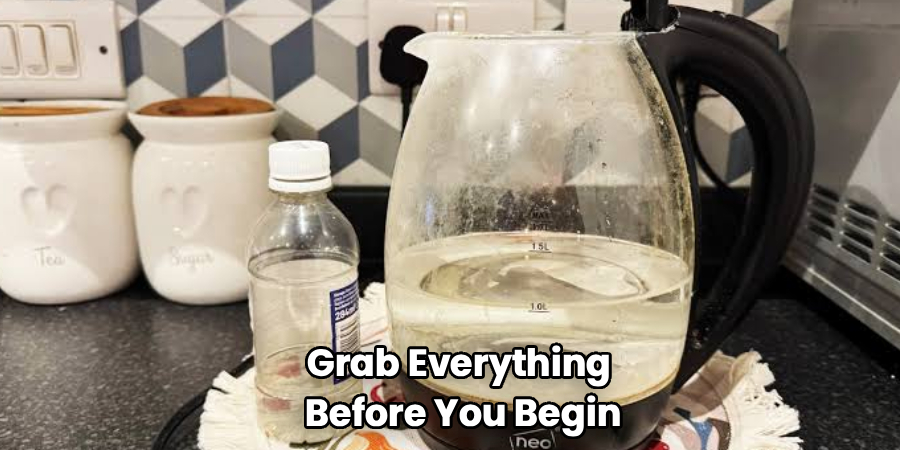
Safety first, every time. Switch off your kettle, unplug it from the wall, and let it cool completely if you’ve used it recently. The glass and heating element hold heat for a while, so give it ten minutes if it feels warm.
Pour out any leftover water and tip the kettle gently to drain the spout. Take a good look inside under decent light. You’ll likely spot a chalky ring along the water line, cloudy glass on the sides, and white flecks of mineral buildup near the base.
Clear a little space on your counter and lay down a towel to catch drips. Knowing exactly where the limescale sits helps you target your cleaning effort where it counts most.
Step 2 – Make Your Vinegar Solution
Vinegar is your best friend for cutting limescale. Mix equal parts white vinegar and water, enough to cover the lower third of the kettle where most buildup collects. For a heavily scaled kettle, you can use a stronger ratio.
Pour the solution in and watch it settle over the cloudy glass and chalky spots. You’ll catch that sharp vinegar smell, which is completely normal and rinses away later.
If you’d rather skip the vinegar scent, swap in lemon juice with water instead. It works on the same acidic principle and leaves a fresher smell behind. Learning how to clean a glass kettle often comes down to this simple, natural solution doing the heavy lifting for you.
Step 3 – Boil and Soak
Now let heat and acid team up. Bring the vinegar solution to a boil, then switch the kettle off the moment it clicks. The hot liquid speeds up the reaction, loosening the limescale clinging to the glass and heating element.
Let it sit and soak for fifteen to twenty minutes. You’ll actually see the hard water stains start to lift, with tiny flakes drifting in the water as the buildup releases its grip.
For a badly scaled kettle, leave it longer, even up to an hour. The wait does most of the scrubbing for you. While it soaks, you can clean the lid and exterior, so no time goes to waste during this hands-off step.
Step 4 – Scrub the Interior Gently
Pour out the warm vinegar solution and look inside. Most of the limescale should wipe away easily now. Reach in with your soft sponge or soft-bristled brush and gently scrub the glass walls, paying attention to the water line where the ring sits.
Work in slow circles and you’ll feel the residue give way under light pressure. Be patient around the heating element, since that area often holds the most stubborn mineral buildup.
Avoid pressing too hard or using anything rough. Glass scratches easily, and scratches trap grime faster next time. For tight spots near the base or spout, your soft toothbrush slips right in. The interior should look noticeably clearer with each pass.
Step 5 – Tackle Stubborn Stains with Baking Soda
Some hard water stains refuse to budge with vinegar alone. That’s where baking soda steps in. Sprinkle a spoonful onto a damp sponge, or make a thin paste with a little water.
Rub it gently over the cloudy patches and any spots that stayed chalky. You’ll feel the mild grit work as a soft scrubber, lifting residue without scratching the glass. The baking soda also neutralizes any lingering odor inside.
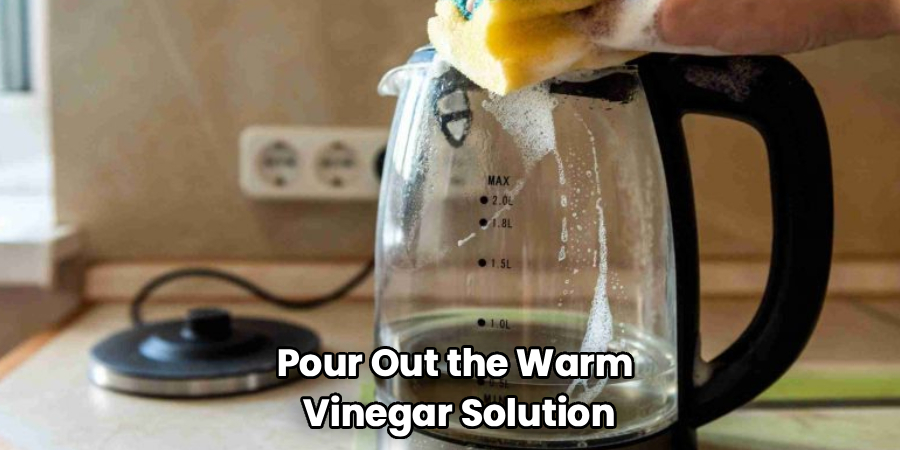
For really tough buildup, let the paste sit on the spot for five minutes before wiping. Then scrub lightly in circles. This combo handles the stubborn flecks that cling near the base, leaving the interior smooth and clear again.
Step 6 – Clean the Lid, Spout, and Filter
Don’t forget the smaller parts, since they hide plenty of grime. Pop off the lid if it detaches, and check the spout filter, which catches loose scale flakes. Many kettles have a small mesh filter you can pull out and rinse.
Dip your soft toothbrush in a little vinegar and scrub the filter, lid edges, and around the spout. You’ll likely dislodge trapped mineral buildup and bits of residue stuck in the hinges.
Rinse each part under running water until the flakes wash away. These tight areas affect how your water pours and tastes, so a quick scrub here makes a real difference. Set the clean parts aside to dry.
Step 7 – Wipe the Exterior
With the inside fresh, turn to the outside. Dampen a soft cloth with warm water and a touch of vinegar, then wipe down the glass exterior and base. Fingerprints, water spots, and dust come off easily.
Be careful around the electrical base and power connection. Keep those areas dry and never submerge the base in water, since that risks damaging the heating element and wiring.
For a streak-free shine, buff the glass with a dry microfiber towel afterward. You’ll see the kettle gleam as the light passes through clear glass again. A clean exterior makes the whole kettle look brand new and shows off your sparkling interior work.
Step 8 – Rinse, Boil, and Refresh
Finish by rinsing away every trace of cleaner. Fill the kettle with clean water, swirl it around, and pour it out. Repeat two or three times until no vinegar smell or baking soda residue remains.
Then fill it with fresh water and boil it once fully. Pour that water out too, since this final boil clears any leftover taste and odor from the glass and heating element.
Take one last look. The interior should sparkle, the water line ring should be gone, and the glass should be crystal clear. Your kettle is now ready for its next pot of tea or coffee, tasting fresh and working at its best.
Critical Mistakes When Cleaning a Glass Kettle
Even careful folks make errors that damage the kettle or leave it worse off. The biggest mistake is using steel wool, scouring pads, or harsh abrasives on the glass. These scratch the surface, and those tiny grooves trap limescale and grime even faster, so the cloudiness comes back sooner.
Another common slip is submerging the electrical base in water. The base houses the heating element and wiring, which must stay dry. Dunking it can cause shorts, corrosion, or a dangerous shock when you plug it back in. Always wipe the base instead, and keep the power connection away from water.
Many people also skip the final rinse and boil. If you leave vinegar or baking soda behind, your next cup of tea will taste sour or chalky. Always rinse two or three times and boil fresh water once before using the kettle again.
Finally, plenty of people wait far too long between cleans. Letting limescale and mineral buildup harden for months turns a quick twenty-minute job into a frustrating scrubbing session. Stick to regular routine maintenance, and your kettle stays clear with hardly any effort.
Expert Tips
Want to keep your kettle sparkling with barely any work? Prevention beats deep cleaning every time. Empty the kettle after each use instead of letting water sit, since standing water leaves fresh mineral deposits behind.
If you live with hard water, descale every two to four weeks before buildup hardens. A quick vinegar boil keeps the glass clear and protects the heating element. For an even gentler routine, switch to filtered water, which slows limescale dramatically.
Keep a lemon half handy too. A quick rub on light water spots freshens the glass and leaves a clean scent. And always dry the exterior after wiping to prevent new water stains. These small habits stop cloudy glass, odor, and stubborn residue from ever taking hold.
Frequently Asked Questions
How often should I clean my glass kettle?
It depends on your water and how often you use it. For most homes, descale the interior every two to four weeks to keep limescale from hardening. If you have hard water or use the kettle daily, lean toward every two weeks. Wipe the exterior weekly, and rinse out standing water after each use. Regular routine maintenance keeps the job quick and easy.
Can I use lemon juice instead of vinegar?
Yes, lemon juice works well as a natural alternative. It’s acidic like vinegar, so it dissolves limescale and mineral buildup effectively while leaving a fresher smell. Mix lemon juice with water, boil it, and let it soak just like you would with vinegar. Some people prefer it because the citrus scent is more pleasant. Always rinse and boil fresh water afterward to clear any lingering taste.
Why does my kettle still look cloudy after cleaning?
Cloudy glass usually means stubborn limescale or hard water stains that need a second pass. Try these fixes:
- Repeat the vinegar boil and soak it longer, up to an hour in kitchen counter
- Use a baking soda paste on the stubborn spots
- Switch to filtered water going forward to slow buildup
If the cloudiness is etched permanently into the glass from years of scale, it may not fully clear, but proper cleaning still helps.
Is it safe to put a glass kettle in the dishwasher?
Usually not. Most glass kettles have an electrical base and heating element that water can damage, so the dishwasher is off-limits for the main body. Some removable parts like the lid or filter may be dishwasher-safe, but always check your kettle’s manual first. Hand-cleaning with vinegar and a soft sponge is gentler, safer, and far more effective at removing limescale anyway.
How do I get rid of a bad smell in my kettle?
Odor usually comes from mineral buildup or stale standing water. To freshen it:
- Boil a vinegar and water solution, then let it soak
- Scrub the interior with a baking soda paste to neutralize smells
- Rinse thoroughly and boil fresh water once or twice
Always empty the kettle after each use and leave the lid open to air out. This stops musty odors from returning.
Conclusion
A clean kettle gives you better-tasting water, faster boiling, and a longer-lasting appliance. The best part? You don’t need pricey products or a technician. With a little vinegar or lemon juice, some baking soda, and about twenty minutes, you can clear away limescale, freshen the interior, and get that glass crystal clear again.
Keep the key steps in mind: unplug and empty the kettle, soak with a vinegar solution, scrub gently, tackle stubborn spots with baking soda, clean the lid and filter, wipe the exterior, then rinse and boil fresh water. Avoid steel wool, never submerge the electrical base, and always do that final rinse so no taste lingers.
Now that you know how to clean a glass kettle the right way, you can keep yours sparkling whether it sits on your kitchen counter or at your favorite campsite. Try it this week and notice the difference in your next cup. A few minutes of routine maintenance goes a long way toward a kettle that looks and works like new.

About
Nick Hall has spent the last seven years working at the intersection of kitchen design and home repair — first as a design assistant at a residential renovation studio, then as a freelance writer covering everything from cabinet layouts to leaky faucet fixes.
Her approach is simple: kitchens should look good and function well. That means she’s just as comfortable talking about color palettes and counter materials as she is walking readers through how to fix a wobbly cabinet hinge or troubleshoot a garbage disposal.
Nick has worked directly with homeowners on small-space kitchen makeovers, budget-conscious renovations, and the kind of everyday repairs that don’t need a contractor — just the right instructions. She writes from experience, not theory, and tests most of the fixes and tips she shares before publishing them.
When she’s not writing, Nick is usually hunting for mid-century kitchen finds at estate sales or helping friends plan their own renovations. She lives in Columbus, Ohio.