
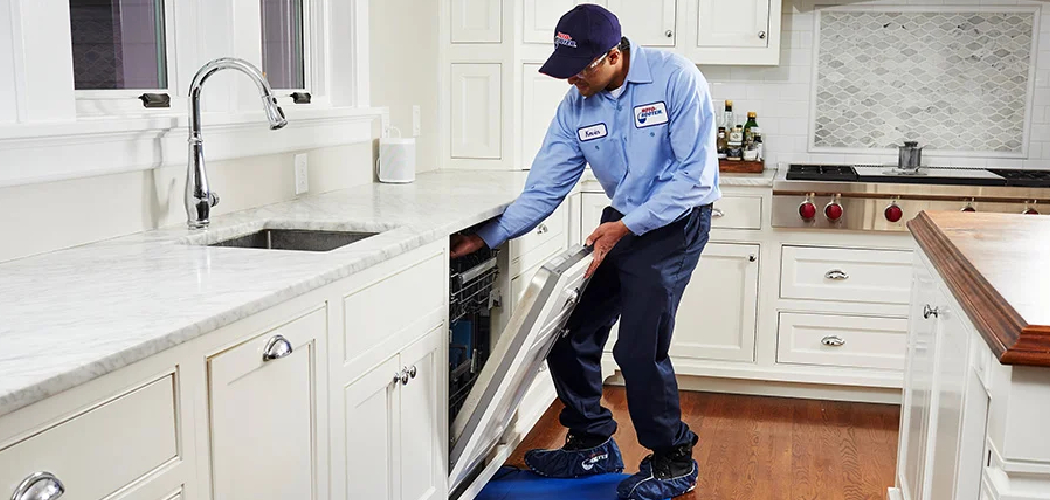
Maybe you’re renovating your kitchen, replacing the flooring, or finally chasing down that mystery leak. Whatever the reason, knowing how to move a dishwasher saves you a service call and a chunk of cash.
It sounds intimidating at first. There’s wiring, a water line, and a heavy appliance wedged snugly under your counter. But with a little patience and the right steps, this is a job most folks can handle in an afternoon.
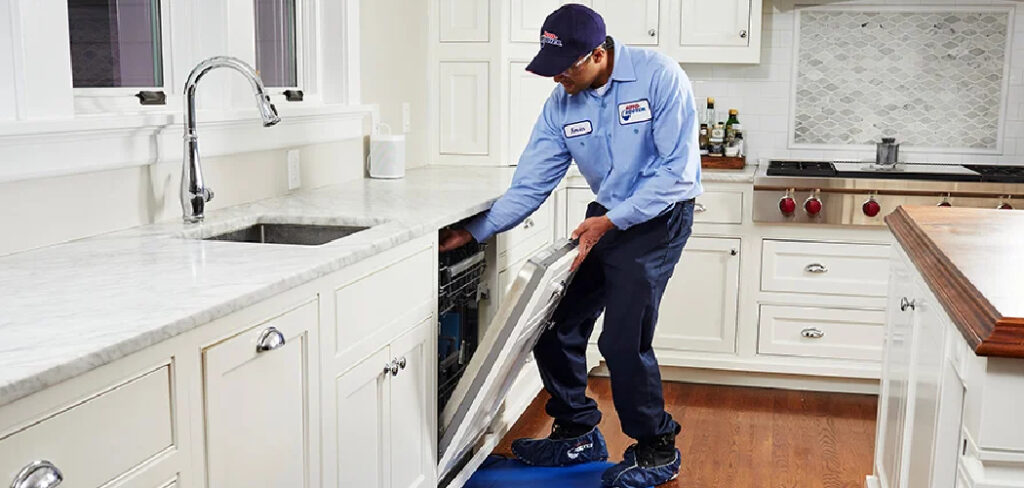
The trick is working slowly and safely. You’ll shut off the power and water, disconnect a few hoses, and ease the unit out without scratching your floors or kinking anything important.
This guide walks you through every step, from cutting the power to inspecting the connections, so you can move your dishwasher with total confidence.
Why Learning to Move a Dishwasher Matters
This skill pays off in more ways than you’d expect. When you can disconnect and move the unit yourself, you avoid pricey technician fees and gain real control over your kitchen projects.
The know-how travels well, too. Campers and outdoor beginners who fit portable dishwashers into RVs, cabins, or tiny homes face the same connections on a smaller scale. Once you understand shutoff valves, drain hoses, and water lines, you can set up or pack down a compact unit anywhere with ease.
For home cooks and DIY appliance owners, the benefits run deeper. You learn how your machine actually connects to your home, which makes future repairs less scary. Spotting a worn hose or a loose bracket early helps you fix small problems before they flood your kitchen and cost you a fortune.
Tools and Materials You’ll Need
You don’t need a professional toolkit for this job. Most of these items are already tucked in a drawer or your garage.
- Screwdriver set (both Phillips and flathead) for mounting screws and the access panel
- Adjustable pliers or a wrench for the water supply line
- A shallow bucket to catch leftover water from the lines
- Plenty of old towels for spills and protecting the floor
- A flashlight to see into the dark cabinet opening
- Work gloves to protect your hands from sharp edges
- A voltage tester to confirm the power is truly off
- Cardboard or a furniture blanket to shield your flooring
For one optional convenience item, grab an appliance dolly. It makes wheeling a heavy dishwasher across the room far easier and saves your back from a serious strain.
Step-by-Step Guide on How To Move A Dishwasher
Step 1 – Shut Off the Power
Safety comes first, always. Head to your electrical panel and find the breaker that controls the dishwasher. Flip it off, then label it with tape so nobody flips it back on while you work.
Some dishwashers plug into an outlet under the sink, while others are hardwired into a junction box. If yours is plugged in, simply unplug it.
Before you touch any wiring, grab your voltage tester and confirm the power is truly dead. This one quick check protects you from a nasty shock.
Take a moment to listen. A quiet, powered-down machine gives you peace of mind. Never skip this step or rush it, because working around live electricity is the single most dangerous part of this whole project.
Step 2 – Turn Off the Water Supply
With the power handled, turn your attention to the water. Look under your kitchen sink for the shutoff valve connected to the dishwasher’s water supply line. It’s usually a small valve with a round or oval handle.
Turn it clockwise until it stops. This cuts the water flow so you won’t get an unexpected spray when you disconnect things later.
If you can’t find a dedicated valve, you may need to shut off the main water supply to your home instead. Better safe than sorry here.
Give the valve a firm but gentle close. You’ll feel the resistance as it seats fully. Once the water’s off, you’ve cleared the second big hurdle and the messy surprises are far less likely.

Step 3 – Protect the Floor and Open the Access Panel
Before anything slides out, lay down protection. Spread cardboard or a furniture blanket across the flooring in front of the dishwasher. This guards against scratches and catches drips.
Now find the toe kick panel, the narrow metal strip along the bottom front of the unit. Grab your screwdriver and remove the screws holding it in place.
Once the panel comes off, set it aside with its screws so nothing rolls away. Shine your flashlight into the gap. You’ll see the wiring, the drain hose, and the water supply line tucked underneath.
Keep towels within arm’s reach as you peer inside. This is your first real look at the connections you’re about to handle, so take your time and study how everything fits together.
Step 4 – Disconnect the Water and Electrical Connections
Now you’ll separate the dishwasher from its lifelines. Slide your shallow bucket under the water supply line and keep a towel ready, because some leftover water always lingers in the lines.
Use your pliers or wrench to loosen the fitting on the water line. Expect a small trickle as you disconnect it. Catch that water in your bucket and wipe up any stray drops right away.
Next, open the junction box or unplug the unit. If it’s hardwired, carefully disconnect the wire nuts and free the wires, making sure they don’t slip back into the wall.
Work slowly and double-check the power stays off. These connections feel fiddly at first, but moving deliberately keeps everything clean and prevents a soggy mess on your nice flooring.
Step 5 – Disconnect the Drain Hose
The drain hose is your last connection to free. It usually runs from the dishwasher to the sink drain or garbage disposal under the counter.
Find where the hose attaches and look for a clamp holding it in place. Loosen the clamp with your screwdriver or pliers, then gently work the hose free.
Have your bucket and towels ready again, since water often sits trapped inside this hose. Tilt the end down into the bucket to drain it out.
Be gentle and avoid kinking the hose as you pull it loose. A cracked hose means a replacement later. Once it’s disconnected, tuck the loose end into the dishwasher’s cabinet so it won’t snag when you start easing the unit out.
Step 6 – Remove the Mounting Screws
Most dishwashers are anchored to the underside of the countertop or the side cabinets with mounting brackets. These screws keep the unit from tipping forward when you open the door.
Look along the top edge of the dishwasher, just under the counter. You’ll spot two screws threaded through small metal tabs. Some models use side brackets instead, so check both spots.
Grab your screwdriver and back these screws out completely. Keep them in a small dish so they don’t vanish into the gap.
You might feel the dishwasher loosen slightly as the last screw comes free. That little shift tells you it’s no longer attached. If the unit still feels stuck, stop and look for hidden fasteners before you force anything.
Step 7 – Ease the Dishwasher Out From Under the Counter
This is the moment you’ve prepped for. Knowing how to move a dishwasher safely really comes down to patience here. The unit is heavy, and the cabinet opening is snug.
First, check the adjustable legs. If the dishwasher sits too high, lower the legs by turning them so the top clears the counter edge. This prevents scraping or scratching as it slides.
Gently rock the unit and pull it forward an inch at a time. Feed the hoses and wires out with it so nothing snags or pulls tight.
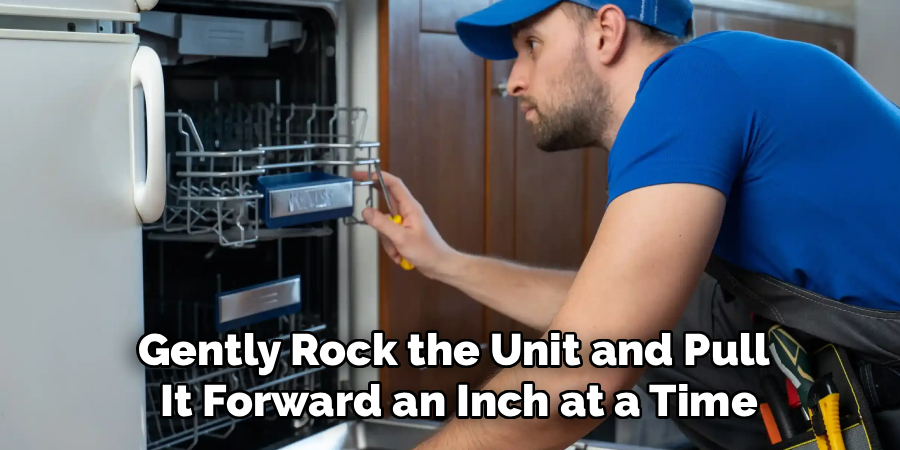
Listen for any catching sounds. If something resists, stop and look. Once the dishwasher clears the opening, guide it onto your protected flooring and pause to catch your breath.
Step 8 – Move It and Inspect the Connections
With the unit free, slide it onto your dolly if you’re rolling it any distance. Recruit a helper for stairs or tight corners, since these machines are awkward and surprisingly heavy.
Wheel it slowly to its new spot, keeping the hoses coiled neatly on top so they don’t drag or catch under the wheels.
Once it’s parked, take a few minutes to inspect everything. Look over the drain hose, water supply line, and electrical wires for cracks, kinks, or wear.
If you plan to store the dishwasher, drain it fully and let it dry to prevent mold and odor. Catching a worn part now saves you a headache when it’s time to reconnect. A careful inspection rounds out the whole job nicely.
Critical Mistakes When Moving a Dishwasher
A few avoidable errors cause most of the trouble people run into, so let’s keep you out of that crowd. The biggest mistake is forgetting to confirm the power is off. Flipping the breaker isn’t always enough, since labels can be wrong. Always test with a voltage tester before you touch a single wire, because skipping this risks a dangerous shock.
Another common slip-up is ignoring the leftover water in the lines. Folks disconnect the water supply line or drain hose expecting it to be dry, then get a surprise puddle on the floor. Keep a bucket and towels ready every time you loosen a fitting.
Many beginners also force the unit out when it feels stuck. A dishwasher that won’t budge usually has a hidden mounting screw or a hardwired connection still attached. Yanking it can crack the flooring, dent the cabinet, or snap a hose. Stop and investigate instead.
People often forget to lower the adjustable legs, too. A unit set too high scrapes the countertop and scratches your floor on the way out. And finally, plenty of DIYers try to lift the heavy machine alone. Grab a dolly or a helper to protect both your back and your appliance.
Expert Tips
Want this job to go even smoother? Snap a few photos before you disconnect anything. Pictures of the wiring, drain hose, and water line make reconnection a breeze later, since you’ll remember exactly where everything goes.
Keep a small zip-top bag handy for screws and clamps. Losing a single mounting bracket screw under the cabinet is frustrating, so corral the hardware as you go.
Lay down a strip of cardboard the moment you start. Sliding the dishwasher across it protects both the appliance feet and your flooring from scratches.
If your unit is hardwired, label the wires with tape before you disconnect them. This tiny habit prevents confusion when you reinstall.
And don’t rush the water shutoff. Test that the valve fully closed by listening for any drip before you loosen the supply line.
Frequently Asked Questions
Do I need to turn off the water and power, or just one?
Turn off both, always. The power protects you from electric shock when handling the wiring, and the water shutoff prevents a spray or flood when you disconnect the supply line. Skipping either one invites a dangerous or messy situation. Flip the breaker, test it with a voltage tester, then close the shutoff valve under your sink before you touch any connection.
How much water will leak out when I disconnect everything?
Usually just a cup or two, but it varies. Some water always lingers in the drain hose and water supply line, even after you shut off the valve. Keep these items ready:
- A shallow bucket to catch the trickle
- Several old towels for quick cleanup
- A second towel to soak up the floor
Tilt the hose down into the bucket to drain it fully and avoid surprise puddles.
Can I move a dishwasher by myself?
You can disconnect it solo, but moving it is easier with help. These machines are heavy and awkward, especially through doorways or over thresholds. If you’re working alone, use an appliance dolly to roll it safely and spare your back. For stairs or tight corners, always grab a second person. Protecting both yourself and the appliance is worth the extra hands.
What if the dishwasher feels stuck and won’t come out?
Stop pulling immediately. A stuck unit almost always means something is still attached. Check for hidden mounting screws under the counter, side brackets, or a hardwired electrical connection you missed. Make sure you lowered the adjustable legs, too, since a unit set too high will catch on the countertop. Forcing it can damage your flooring, the cabinet, or the appliance, so investigate first.
Do I need to drain the dishwasher before moving it?
Yes, especially for longer moves or storage. Run a quick cycle beforehand, then disconnect and tilt the hoses to empty any trapped water. For storage, let the interior dry completely with the door cracked open. This prevents mold, mildew, and that sour smell from settling in while the machine sits unused for weeks or months.
Conclusion
Moving your dishwasher really comes down to working slowly and respecting the connections. With a little prep and the right tools, you can handle this job yourself and skip the costly service call.
Start with safety every time. Shut off the power at the breaker and confirm it with a voltage tester, then close the shutoff valve under your sink. Protect your flooring, remove the toe kick panel, and disconnect the water supply line, drain hose, and electrical wires while keeping a bucket and towels close by.
From there, back out the mounting screws, lower the adjustable legs, and ease the unit gently from the cabinet opening. Roll it on a dolly, grab a helper for the heavy lifting, and inspect every connection before you reinstall or store it.
Take your time, watch for hidden fasteners, and never force a stuck unit. Now that you know how to move a dishwasher the safe way, you can tackle renovations, repairs, and deep cleans with confidence, keeping your kitchen running smoothly for years to come.

About
Nick Hall has spent the last seven years working at the intersection of kitchen design and home repair — first as a design assistant at a residential renovation studio, then as a freelance writer covering everything from cabinet layouts to leaky faucet fixes.
Her approach is simple: kitchens should look good and function well. That means she’s just as comfortable talking about color palettes and counter materials as she is walking readers through how to fix a wobbly cabinet hinge or troubleshoot a garbage disposal.
Nick has worked directly with homeowners on small-space kitchen makeovers, budget-conscious renovations, and the kind of everyday repairs that don’t need a contractor — just the right instructions. She writes from experience, not theory, and tests most of the fixes and tips she shares before publishing them.
When she’s not writing, Nick is usually hunting for mid-century kitchen finds at estate sales or helping friends plan their own renovations. She lives in Columbus, Ohio.