
That funky whiff rising from your sink can take over a whole kitchen fast. One minute you’re washing dishes, the next you’re wrinkling your nose at a sour, swampy odor that just won’t quit. It’s frustrating, especially when your counters look spotless.
The good news? A smelly drain rarely means a serious problem. Most of the time, it’s trapped food, greasy residue, or a thin layer of biofilm clinging to your pipes. All of these clear up with a little elbow grease and a few household supplies.

Learning how to get rid of drain smell in kitchen spaces saves you money and keeps your home feeling fresh. You don’t need a plumber or harsh chemicals for this. This guide walks you through the whole process, step by step, so you can banish that odor for good.
Why Getting Rid of Kitchen Drain Smell Matters
A clean, odor-free drain does more than spare your nose. Lingering kitchen sink odor often signals food buildup or bacteria growing inside your pipes, and ignoring it can lead to slow drains or a full grease blockage down the line.
This skill follows you everywhere, too. If you love weekend adventures, an RV sink develops the same sour smells and needs the same simple care. A cabin kitchen relies on basic plumbing you’ll maintain yourself, miles from any help.
Even a camp wash station or a temporary outdoor prep area benefits when you understand trap seals, standing water, and drain deodorizing tricks. Once you learn how these systems work, you can freshen any sink, anywhere. That confidence keeps your spaces clean and your meals pleasant, whether you’re home or out exploring.
Tools and Materials You’ll Need
Gather your supplies first so you’re not scrambling mid-job. Start with a box of baking soda and a bottle of white vinegar, the dynamic duo behind most natural drain cleaning. You’ll also want a kettle or pot for boiling hot water, which flushes loosened gunk straight through.
Grab a sturdy scrub brush, plus a smaller bottle brush for reaching into the drain opening and around the sink strainer. A pair of rubber gloves keeps your hands clean while you dig into greasy residue. Keep a flashlight nearby for peering under the sink at the P-trap and pipes.
One optional convenience item worth having is an old toothbrush. It slips into tight corners around the disposal splash guard and rubber flaps where odors love to hide.
Step-by-Step Guide on How to Get Rid of Drain Smell in Kitchen
Take this one stage at a time and you’ll track down that smell quickly. Knowing how to get rid of drain smell in kitchen sinks comes down to patience, a few cleaning basics, and checking each likely hiding spot.
Step 1 – Find the Source of the Odor
Before you scrub anything, play detective. Lean close and sniff around the drain, the sink strainer, and the rubber splash guard if you have a garbage disposal. A sour, food-like smell usually points to trapped scraps, while a rotten egg or sewer gas smell hints at a deeper plumbing issue.
Run the water briefly and notice if the odor strengthens. Standing water in the basin or slow draining tells you gunk has built up below.
Pinpointing the source saves you from cleaning the wrong spot. Sometimes the smell isn’t even in the drain—it’s lurking on the disposal flaps or under the rim. A minute of careful sniffing now guides every step that follows.
Step 2 – Clear the Sink Strainer and Drain Opening
Start at the top, where most trouble begins. Lift out the sink strainer or stopper and check it closely. You’ll likely find slimy food bits, coffee grounds, or a greasy film clinging to the underside.
Rinse it under hot water and scrub it with your brush until it looks and smells clean. Then reach into the drain opening itself with a bottle brush or an old toothbrush.

Work the bristles around the rim and just inside the pipe. You may feel a slippery layer of drain biofilm—that’s the bacteria causing much of the stink. Scrub it loose, rinse thoroughly, and wipe everything dry. This simple cleaning often knocks out a surprising amount of the odor right away.
Step 3 – Tackle the Garbage Disposal
If your sink has a disposal, it’s a prime suspect for garbage disposal odor. Old food clings to the grinding chamber and the rubber splash guard, festering into a sour stench.
First, make sure the disposal is off. Lift the rubber flaps and scrub both sides with your toothbrush and a little dish soap. You’ll be amazed at the gunk hiding there.
Next, toss a handful of ice cubes and a few citrus peels down the disposal, then run it with cold water. The ice scours the blades while the peels leave a fresh scent. Listen for a smooth grind, not a struggling whir. This quick refresh clears trapped residue and brightens the whole sink area.
Step 4 – Flush With Baking Soda and Vinegar
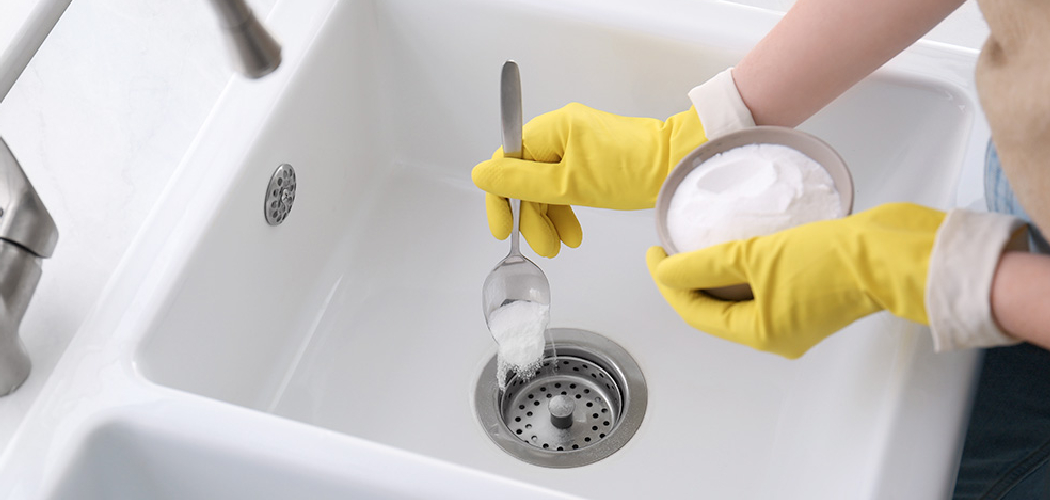
Now for the classic combo that handles most odors. Pour about half a cup of baking soda directly into the drain, nudging it down with your fingers or a spoon.
Follow it with a cup of white vinegar. You’ll hear an instant fizz and see bubbly foam rise up—that reaction lifts grease and loosens stubborn buildup clinging to your pipe walls.
Let it work its magic for ten to fifteen minutes. The bubbling sound fades as it settles deeper into the drain. This natural pairing deodorizes and breaks down the gunk that chemical cleaners often miss, all without harsh fumes. It’s gentle on your plumbing and tough on the smell, making it the heart of any good drain deodorizing routine.
Step 5 – Rinse With Boiling Hot Water
Once the fizzing settles, it’s time to flush everything away. Bring a kettle or pot of water to a rolling boil, then pour it slowly and steadily down the drain.
The hot water melts loosened grease and washes the baking soda mixture clean through your pipes. You’ll often catch a final waft of the old odor as it disappears down the line.
Pour carefully to avoid splashing yourself. If you have PVC pipes, let the water cool just slightly off the boil, since extreme heat can soften plastic over time. This rinse is the satisfying finish to your sink pipe cleaning, sweeping away the residue you worked so hard to break loose.
Step 6 – Check and Clean the P-Trap
Still smelling something funky? The P-trap is your next stop. This curved pipe under the sink holds a little standing water that blocks sewer gas, but it also traps food and grease.
Place a bucket beneath it to catch water, then unscrew the slip nuts by hand or with pliers. Slide the trap free and peek inside—you’ll often find a sludgy mess of dark, greasy buildup.
Scrub the inside with your bottle brush and hot soapy water until it runs clear. Rinse well, then reattach the trap snugly, checking that the connections feel tight. This deeper clean clears blockages that surface scrubbing simply can’t reach.
Step 7 – Inspect the Trap Seal and Vent
A dry trap or a blocked vent causes that rotten egg smell to seep back in. If you rarely use a sink, the water in the P-trap evaporates, letting sewer gas drift up. Just run the tap for a few seconds to refill the trap seal.
Vent issues are trickier. Your plumbing relies on a vent pipe to balance air pressure, and a clogged vent makes drains gurgle and smell.
Listen for gurgling sounds as water drains. If you hear them along with persistent odor, the rooftop vent may be blocked by leaves or debris. Clearing it often requires a careful look from above, so call a pro if heights aren’t your thing.
Step 8 – Run a Final Freshness Test
Time to confirm your hard work paid off. Run hot water down the drain for thirty seconds, then lean in and take a good sniff. The air should smell clean and neutral, with no trace of that earlier funk.
Check that the water drains quickly without pooling. Lingering standing water means there’s still a partial clog worth chasing.

For ongoing freshness, drop a few citrus peels or a spoonful of baking soda down the drain weekly. This light plumbing maintenance keeps biofilm from rebuilding. If the smell stays gone, you’ve won. If a faint odor remains, repeat the baking soda and vinegar flush, since deep buildup sometimes needs a second round.
Critical Mistakes When Dealing With Kitchen Drain Smell
A few common slip-ups send beginners in circles, so let’s clear them up. The biggest mistake is reaching straight for harsh chemical drain cleaners. They promise quick fixes but often mask the smell temporarily, corrode older pipes, and fail to remove the biofilm actually causing the odor. Natural methods clean more thoroughly and protect your plumbing.
Another frequent error is cleaning only the visible drain opening while ignoring the garbage disposal and P-trap. The worst smells usually hide in these spots, so a surface scrub leaves the real problem untouched. Always check the disposal flaps and the curved trap beneath the sink.
Many people also forget about dry trap seals. If a sink sits unused for weeks, the water barrier evaporates and lets sewer gas drift right in. A quick splash of water fixes it, yet folks overlook this simple cause entirely.
Finally, pouring grease down the drain undoes all your work. Hot grease feels liquid but hardens inside pipes, building blockages that trap food and breed odor. Wipe greasy pans with a paper towel before washing, and your drain stays cleaner far longer.
Expert Tips
Want lasting freshness? Lean on a few habits the pros swear by. Run cold water before, during, and after using your garbage disposal, since cold keeps grease solid so it grinds up instead of coating your pipes.
Make drain deodorizing a weekly ritual rather than a rescue mission. A simple baking soda flush every Sunday stops biofilm from ever taking hold, which beats scrubbing built-up grime later.
Toss citrus peels, ice, and a pinch of salt into your disposal regularly for a natural scour and a bright scent. Keep a sink strainer in place at all times to catch food scraps before they slip down and rot. And never pour cooking oil down the drain—collect it in a jar and toss it in the trash instead. Small, steady care saves you big headaches.
Frequently Asked Questions
Why does my kitchen sink smell like rotten eggs?
That rotten egg or sewer gas smell usually points to one of these causes:
- A dry P-trap letting sewer gas drift up through the drain.
- Trapped food and bacteria breaking down inside the pipes.
- A blocked vent pipe disrupting your plumbing’s airflow.
Start by running water to refill the trap seal, then clean the drain and disposal. If the smell lingers, check the vent.
How often should I clean my kitchen drain?
For most kitchens, a quick baking soda and vinegar flush once a week keeps odors away. If you cook often or use the garbage disposal heavily, give it a deeper clean every couple of weeks. Regular light maintenance always beats waiting for a stink to appear, since it stops biofilm and grease from building up in the first place.
Is it safe to use baking soda and vinegar in my pipes?
Yes, it’s one of the safest and gentlest cleaning methods you can use. Baking soda and vinegar create a foaming reaction that lifts grease and deodorizes without corroding your pipes. It works on PVC, metal, and most plumbing. Unlike harsh chemical cleaners, it won’t damage seals or fittings, making it perfect for regular, worry-free drain maintenance.
What if the smell comes back after I clean?
A returning odor usually means buildup remains deeper in the pipes or P-trap. Repeat the baking soda and vinegar flush, then follow with boiling water. If that doesn’t work, remove and scrub the P-trap directly, since stubborn grease often hides there. Persistent rotten egg smells may point to a vent issue that needs a closer look or professional help.
Can a smelly drain mean a bigger plumbing problem?
Sometimes, yes. While most odors come from simple food buildup, a strong sewer gas smell that returns despite cleaning can signal a dry trap, a blocked vent, or a cracked pipe. Gurgling drains and slow water flow are warning signs. If thorough cleaning doesn’t fix it, call a plumber to inspect for hidden issues before they worsen.
Conclusion
You’ve now walked through the whole process, from sniffing out the source to flushing your pipes clean and checking the P-trap. The secret really comes down to a few steady habits: clean the strainer and disposal, use baking soda and vinegar, and rinse with boiling water to wash the gunk away.
Remember the details that matter most. Keep your trap seal full, skip the harsh chemicals, and never pour grease down the drain. A weekly flush stops biofilm before it ever takes hold, saving you from bigger smells and slow drains later.
Mastering how to get rid of drain smell in kitchen sinks hands you real independence and keeps your home feeling fresh without a plumber’s bill. You’ll breathe easier at mealtime, protect your pipes from buildup, and gain the confidence to handle the next little fix that pops up—at home, in an RV, or out at a cabin sink.
So grab your baking soda, boil that kettle, and get to work. A fresh, odor-free kitchen is just a few minutes away.

About
Nick Hall has spent the last seven years working at the intersection of kitchen design and home repair — first as a design assistant at a residential renovation studio, then as a freelance writer covering everything from cabinet layouts to leaky faucet fixes.
Her approach is simple: kitchens should look good and function well. That means she’s just as comfortable talking about color palettes and counter materials as she is walking readers through how to fix a wobbly cabinet hinge or troubleshoot a garbage disposal.
Nick has worked directly with homeowners on small-space kitchen makeovers, budget-conscious renovations, and the kind of everyday repairs that don’t need a contractor — just the right instructions. She writes from experience, not theory, and tests most of the fixes and tips she shares before publishing them.
When she’s not writing, Nick is usually hunting for mid-century kitchen finds at estate sales or helping friends plan their own renovations. She lives in Columbus, Ohio.