
A tea bag hides something from you. It hides the leaves. It hides the quality. It hides the room they need to open and breathe.
That sounds harsh. But it’s true.
Loose leaf tea needs space. Inside a paper bag, crushed leaves stay cramped. They can’t unfurl. They can’t release their full flavor. You end up with a flat, dusty cup that tastes like a shadow of the real thing.
A tea infuser changes that. It gives the leaves room to swirl, swell, and steep. The water flows through. The flavor flows out. And you keep the leaves out of your mug.
Learning how to use a tea infuser is one of the simplest upgrades you can make to your daily cup. This guide walks you through every step, so you brew a cleaner, richer, more honest cup of tea.
Why Using a Tea Infuser Matters
You could keep buying tea bags. Many people do.
But think about what’s inside one. Broken leaves. Tiny fragments. Sometimes just dust. The good stuff stays out of reach.
A tea infuser opens that door. It holds whole loose leaf tea and lets it bloom in hot water. More surface area means more flavor. Simple as that.
It saves you money too. Loose tea costs less per cup than bagged tea, and you control exactly how much you use.
It cuts waste. No paper. No staples. No string. Just leaves and a reusable basket you rinse and use again.
And it gives you control. Stronger or lighter. Longer or shorter. Your cup, your rules.
A tea bag gives you a guess. An infuser gives you a choice. Which would you rather drink?
Tools and Materials You’ll Need
Gather everything before the kettle sings. A quick setup keeps the whole process calm and easy.
- A tea infuser – a mesh ball, a basket, or a built-in steeping basket for your teapot
- Loose leaf tea – black, green, white, oolong, or herbal, your choice
- A mug or teapot – tall enough to hold the infuser and let leaves move freely
- A kettle – to heat your water to the right temperature
- Fresh, filtered water – clean water makes a cleaner-tasting cup
- A spoon – to measure your tea and stir if needed
- A small saucer or dish – to rest the wet infuser after brewing
Optional but helpful: a timer. It takes the guesswork out of brew time, so you pull the infuser at the perfect moment instead of hoping you got it right.
Step-by-Step Guide on How to Use a Tea Infuser
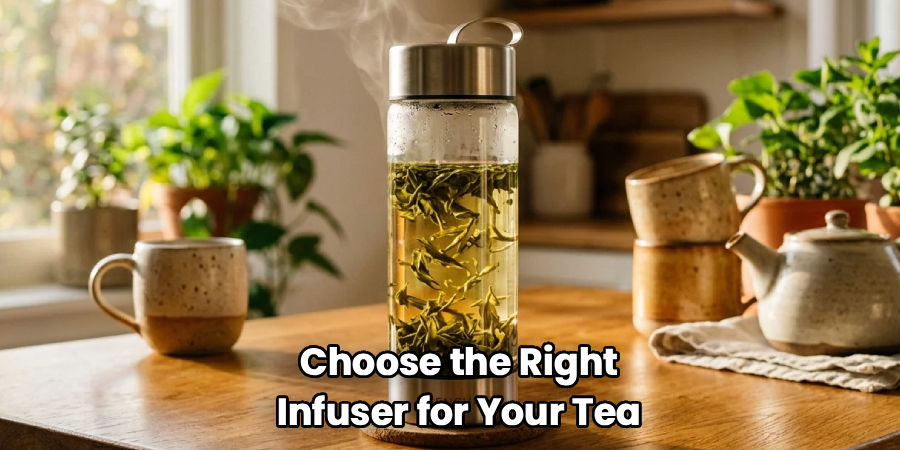
Step 1 – Choose the Right Infuser for Your Tea
Start with the right tool. Not every infuser suits every tea.
Look at the mesh. A fine mesh infuser holds small leaves and broken bits that a wide basket would let slip through. A roomy steeping basket gives large, fluffy leaves the space they crave.
Small ball infusers work for a single cup. Larger baskets fit a whole teapot.
Pick the size that matches your brew. Hold it. Notice how much room sits inside.
Tightly packed leaves can’t expand. Cramped leaves brew weak, flat tea. So give them space.
Knowing how to use a tea infuser starts here, with the right basket for the right leaves. Choose first. Brew second.
Step 2 – Measure Your Loose Leaf Tea
Now scoop your tea. The right amount makes or breaks the cup.
A good rule: one teaspoon of tea leaves per cup of water. For a bolder brew, add a little more.
Watch the leaf size. Large, fluffy leaves like white tea need a heaping spoon. Dense leaves like black tea need less.
Drop the tea into the infuser. Leave room at the top, around half empty. The leaves will swell as they soak.
Pack it too full and water can’t flow through. You’ll get uneven flavor and weak tea.
Run your fingers over the dry leaves. Smell them. That dry scent hints at the flavor waiting to wake up in hot water.
Step 3 – Heat Your Water to the Right Temperature
Temperature matters more than most people think. Too hot scorches. Too cool falls flat.
Black tea and herbal blends love near-boiling water, around 200 to 212°F. Green and white tea prefer it cooler, around 160 to 185°F.
Boiling water on delicate green leaves turns them bitter fast. You’ll taste it instantly, a sharp, harsh edge.
If you don’t own a thermometer, let boiled water rest for a minute or two before pouring over green tea. That short pause drops the heat enough.
Listen to the kettle. The rolling boil tells you the water’s ready. The quiet that follows means it’s cooling.
Pour fresh water every time. Reboiled water tastes flat and dull.
Step 4 – Place the Infuser in Your Mug or Teapot
Set the stage before the pour. Position the infuser first.
Lower it into your empty mug or teapot. Let it rest near the bottom, where the water will run deep.
If your infuser has a chain or handle, drape it over the rim. This keeps it easy to grab later, no fishing with a hot spoon.
A built-in steeping basket sits right inside the teapot lip. Just settle it into place.
Make sure the infuser sits low enough to submerge fully once you add water. Leaves above the waterline never steep.
A steady infuser waiting in the mug means your hands stay free for the kettle. Small setup. Smooth pour.
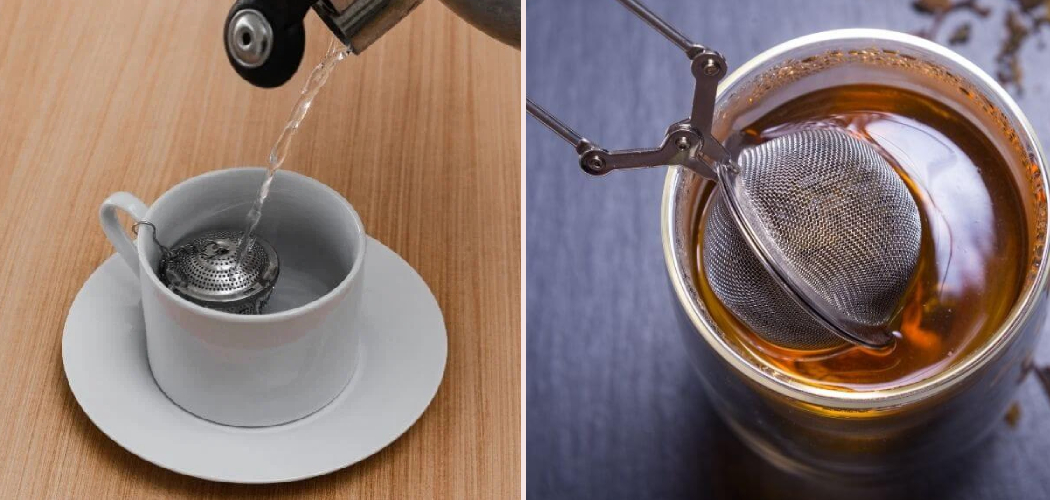
Step 5 – Pour the Hot Water Over the Leaves
Here’s where the magic begins. Pour with care.
Tip the kettle slowly and let the water cascade over the tea basket. Aim straight for the leaves so they soak from the very first second.
Fill the mug until the infuser sits fully underwater. Every leaf needs contact with the water to release its flavor.
Watch the color bloom. Within moments, ribbons of amber, gold, or green swirl up from the basket and spread through the water.
Breathe in. That first rise of steam carries the aroma, fresh and full.
Don’t overfill. Leave a little space at the top so you can lift the infuser later without spilling a drop.
Step 6 – Steep for the Right Brew Time
Patience pays off now. Steeping is where flavor builds.
Each tea has its own clock. Green tea needs two to three minutes. Black tea wants three to five. Herbal blends can steep five minutes or more.
Set your timer the moment you pour. Guessing leads to bitter or weak tea.
Watch the water deepen in color. Lighter shades mean a milder cup. Darker means stronger and bolder.
Resist the urge to stir constantly. Let the leaves work on their own.
Oversteeping is the most common slip. Leave the leaves too long and tannins flood out, turning your cup harsh and dry.
Knowing how to use a tea infuser well means respecting the clock. Time it right. Taste the difference.
Step 7 – Remove the Infuser Cleanly
When the timer rings, act. Don’t let the leaves linger.
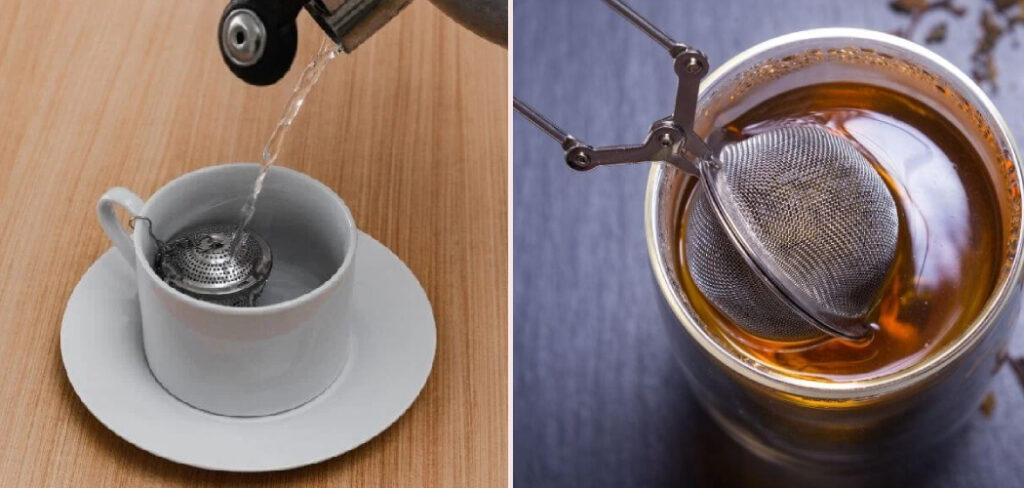
Grip the chain, handle, or rim of the basket. Lift the infuser straight up and out of the mug.
Hold it over the cup for a second. Let the last drops fall back in, so you lose none of that brewed flavor.
Move it to your saucer or dish. Wet leaves drip, and you don’t want trails across the counter.
Don’t squeeze the basket. Pressing the soggy leaves forces out bitter tannins and clouds your clean cup.
Look at your tea now. Clear, glowing, free of floating bits. That’s the payoff for pulling the infuser at the right moment.
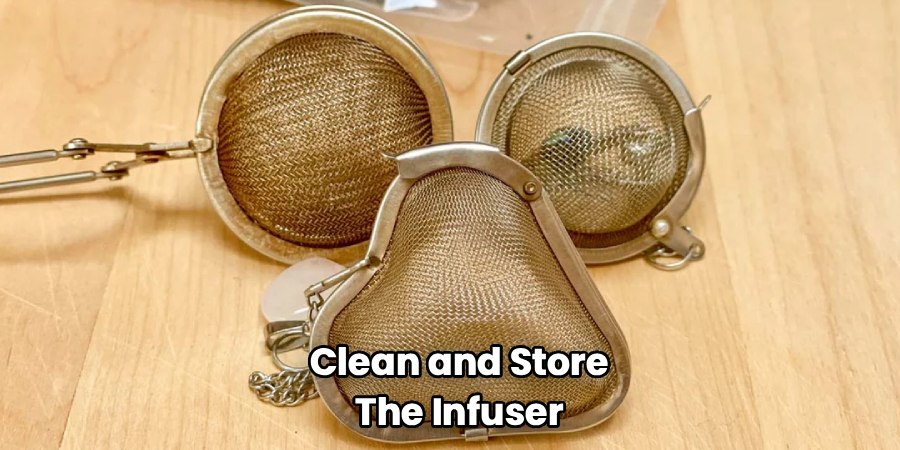
Step 8 – Clean and Store the Infuser
A clean infuser is ready for the next cup. A neglected one stains and clogs.
Tap the wet leaves into your compost or bin while they’re loose. They slide out easiest right after brewing.
Rinse the mesh under warm running water. Push water through both sides to clear trapped bits.
Tea stains the mesh over time, leaving a brown tint. A soft brush clears stubborn spots better than a sponge that snags.
Hold it to the light. Can you see through every hole? Good. That means it’s clean.
Dry it fully before storing. A damp infuser breeds odor and, in metal ones, leaves spots. Hang it or rest it open to air.
Critical Mistakes When Using a Tea Infuser
The biggest mistake is overpacking the basket. You stuff in the leaves, hoping for a stronger cup, but the opposite happens. Crammed leaves can’t expand, so water never flows around them. You end up with weak, uneven tea and a mess of wet leaves jammed in the mesh. Fill the infuser halfway at most. Give the leaves room to swell and swirl.
Another common error is using water at the wrong temperature. Boiling water poured over delicate green or white tea scorches the leaves and turns your cup bitter within seconds. Match the heat to the tea. Hot for black and herbal, cooler for green and white. That single adjustment saves an entire pot.
Many people also let the tea steep far too long. They walk away, forget the timer, and return to a dark, harsh brew packed with bitter tannins. Set a timer every time and pull the infuser the moment it rings.
Then there’s squeezing the basket. Pressing the soggy leaves seems efficient, but it forces out bitterness and clouds your tea. Just lift and let it drip.
Finally, don’t skip the cleaning. Dried leaves clog the mesh and leave stale flavors in your next cup. Rinse right away, every single time.
Expert Tips
A few small habits turn a plain cup into a great one.
Warm your mug or teapot first. Swirl a little hot water inside, then pour it out before brewing. A warm vessel holds heat longer and keeps your tea from cooling too fast.
Try a second steep. Quality loose leaf tea often gives a fine second cup, especially green and oolong. Just add fresh hot water and steep a touch longer.
Taste as you go. Lift the infuser, sip, and decide if it needs more time. Your tongue is the best timer you own.
Store your loose tea in an airtight tin, away from light and heat. Fresh leaves brew brighter flavor.
And start with good water. Filtered water lets the true taste of the tea come through. Small move. Cleaner cup.
Frequently Asked Questions
How Much Loose Leaf Tea Should I Use?
Start with one teaspoon of tea leaves per cup of water, then adjust to taste. Some teas need a little more because of their size:
- Light, fluffy leaves (white tea, some green) – use a heaping teaspoon
- Dense leaves (black tea, rooibos) – a level teaspoon works
- Stronger brew – add an extra half teaspoon
Remember to leave room in the infuser so leaves can expand fully.
How Long Should I Steep My Tea?
Brew time depends on the tea type. Green tea steeps two to three minutes, black tea three to five, and herbal blends five minutes or more. Always set a timer when you pour. Leaving the infuser in too long releases bitter tannins and ruins the flavor. When in doubt, steep shorter and taste. You can always add a minute, but you can’t undo an oversteeped cup.
Can I Reuse Loose Leaf Tea Leaves?
Yes, many quality teas give a good second steep. Green tea and oolong reuse especially well. After your first cup, leave the wet leaves in the infuser and add fresh hot water. Steep the second round a little longer, since the leaves release flavor more slowly the second time. Black and herbal teas usually fade after one use, so judge by taste and color.
What Temperature Should the Water Be?
It depends on your tea. The wrong heat is one of the most common mistakes, so match it carefully:
- Black and herbal tea – near boiling, 200 to 212°F
- Oolong tea – around 185 to 195°F
- Green and white tea – cooler, 160 to 185°F
No thermometer? Let boiled water rest a minute or two before pouring over delicate green leaves.
Why Does My Tea Taste Bitter?
Bitterness usually comes from one of three slips. You steeped too long, you used water that was too hot, or you squeezed the infuser and forced out tannins. Fix it by setting a timer, cooling your water for green and white tea, and lifting the basket gently without pressing. Make those three changes and your next cup will taste smooth and clean.
Conclusion
A tea infuser rewards a little care and attention. Choose the right basket. Measure your leaves. Heat your water to match the tea. Pour, steep, and lift at the right moment.
That’s the whole rhythm. Measure. Pour. Time. Lift.
Your first cup might feel like guesswork. That’s fine. By your third, your hands move on their own. By your fifth, you’ll brew without even glancing at the clock.
You now know how to use a tea infuser like someone who’s done it for years. No bitter cups. No floating leaves. No flat, dusty flavor from a crumpled bag.
So fill the kettle this afternoon. Scoop a spoon of loose leaf tea, let it bloom in hot water, and pour yourself a cup that tastes the way tea should.
The infuser does the holding. The leaves do the work. You just guide the timing.
And every cup you brew from here gets a little richer, a little cleaner, a little more your own. Will you put the kettle on tonight?
