
Moving an oven looks simple until you meet the weight, sharp metal edges, tight doorways, and hidden connections behind it. A standard range can scratch floors, strain your back, or damage a gas line if you rush the job. The good news is that learning how to move an oven safely is very doable when you prepare the space, use the right tools, and follow a careful sequence.
You do not need to be a professional mover, but you do need patience and a clear plan. Small checks, like turning off the shutoff valve or protecting the floor, make a big difference. This guide will show you how to disconnect, move, and position an oven with confidence.
Why Learning to Move an Oven Matters
Knowing how to move heavy cooking equipment helps far beyond a kitchen remodel. Campers, cabin owners, and outdoor beginners often deal with portable ovens, camp stoves, RV ranges, and outdoor cooking setups. These appliances may be smaller than a home oven, but they still need safe lifting, stable transport, and careful reconnecting.
This skill also helps when you clean behind an oven, replace flooring, move into a new home, or set up an outdoor kitchen. You learn how to measure doorways, protect surfaces, handle cords, and avoid pinched fingers. For beginners, the biggest benefit is control. Instead of guessing, you understand what to check before anything moves.
Tools and Materials You’ll Need
Gather everything before you start so you do not leave a heavy oven half-moved while searching for supplies. The right gear makes the job safer, smoother, and less stressful.
- Appliance dolly rated for heavy appliances
- Moving straps or lifting straps
- Work gloves with a good grip
- Floor protection, such as cardboard, plywood, or moving blankets
- Tape measure for measuring doorways and clearances
- Adjustable wrench for gas fittings, if needed
- Screwdriver for brackets or trim pieces
- Flashlight for checking the back of the oven
- Towels or blankets to protect corners and walls
- Optional convenience item: furniture sliders for short, careful sliding on hard floors
If your oven connects to gas and you are unsure about the line, call a qualified professional.
Step-by-Step Guide on How to Move an Oven
Step 1 – Plan the Route Before You Touch the Oven
Start by studying the full path from the oven’s current spot to its next location. Measure doorways, hallways, turns, stair landings, and any narrow spaces. Compare those measurements with the oven’s width, depth, and height. Leave extra room for your hands, the appliance dolly, and any padding around the appliance.
Clear the route completely. Move rugs, shoes, chairs, pet bowls, and anything else that could trip you. Look at the floor surface, too. Tile, hardwood, vinyl, and laminate can all scratch or crack under heavy pressure. When people ask how to move an oven, the safest answer always starts with planning before lifting.
Step 2 – Turn Off Power and Gas Connections
Before the oven moves even an inch, shut off every energy source. For an electric oven, unplug the power cord from the wall outlet. If the plug sits low behind the appliance, pull the oven forward only enough to reach it safely, using slow pressure and floor protection.
For a gas oven, turn the shutoff valve to the off position. The valve usually sits behind the range or inside a nearby cabinet. The handle often turns perpendicular to the gas line when closed. If you smell gas, hear a hiss, or feel unsure about the connection, stop right away. Open windows, avoid flames or switches, and call a professional.
Step 3 – Remove Loose Parts and Secure the Door
Take out oven racks, trays, pans, thermometers, and anything stored in the lower drawer. Loose parts can slide, rattle, or fall out while you move the appliance. Removing them also makes the oven a little lighter and easier to control.
Next, secure the oven door. You can use painter’s tape, stretch wrap, or a moving strap, but avoid sticky tape that may damage the finish. Do not rely on the door handle for lifting. It is not built to carry the oven’s weight. If the appliance has removable knobs, take them off and place them in a labeled bag so they do not snap or get lost.
Step 4 – Protect the Floor and Nearby Surfaces
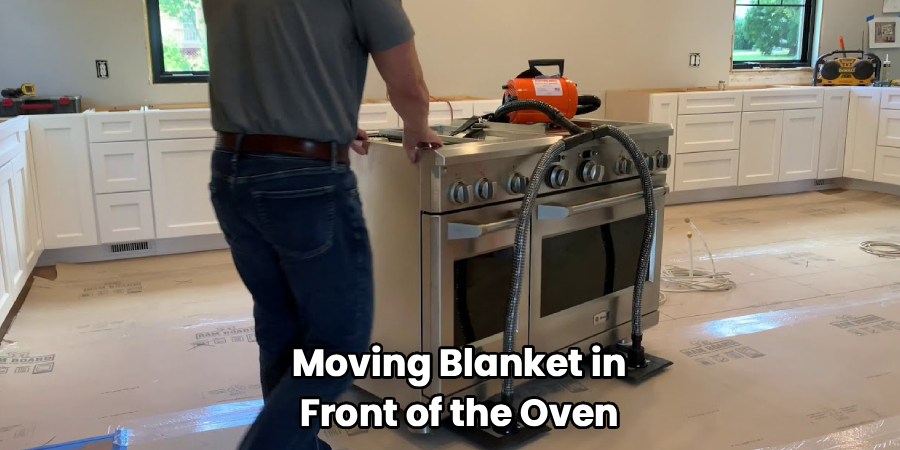
Place cardboard, plywood, or a moving blanket in front of the oven before you slide it out. Hardboard or thin plywood works well on soft flooring because it spreads the weight more evenly. On tile, cardboard can help prevent grit from grinding into the surface.
Move slowly and listen for scraping. A rough metal foot or damaged leveling leg can leave a deep mark before you notice it. Protect door frames and cabinet corners with towels or blankets, especially in tight kitchens. Good floor protection is not just about looks. It also gives the appliance a smoother path, which reduces sudden jerks and makes the move safer for your body.
Step 5 – Ease the Oven Out from the Wall
Grip the oven from the sides, not from the handle or control panel. Pull it forward a few inches at a time. If it resists, stop and look behind it with a flashlight. A power cord, gas line, anti-tip bracket, or uneven leveling leg may be holding it back.
Use gentle rocking rather than hard yanking. The oven may feel stuck at first because grease, dust, and pressure have settled around the feet. As it moves, keep one person watching the back if possible. This is a key moment in how to move an oven because most damage happens when someone pulls too fast and strains a hidden connection.
Step 6 – Load the Oven onto the Appliance Dolly
Position the appliance dolly at the strongest side of the oven, usually the back or a flat side panel. Tilt the appliance only as much as needed to slide the dolly plate underneath. Keep your back straight, bend your knees, and let your legs do the work.
Once the oven sits on the dolly, secure it with moving straps. The straps should be snug but not crushing knobs, glass, or trim. Keep the oven upright whenever possible, especially if it has sensitive parts or a glass cooktop. One person should guide the dolly while another spots corners, walls, and thresholds. Move slowly enough that you can stop without losing balance.
Step 7 – Move, Position, and Reconnect Carefully
Roll the oven along the planned path with steady, controlled movement. Take ramps, thresholds, and small steps slowly. If you need to lift, count together before raising the appliance, and keep hands away from pinch points. Never twist while carrying weight.
At the new spot, set the oven down gently and check that it sits level. Adjust the leveling legs if it rocks or leans. Reconnect the power cord, and if it is a gas model, make sure the gas line is secure and not kinked. Perform safety checks before use. The final part of how to move an oven is not speed; it is making sure the appliance works safely in its new position.
Common Mistakes When Moving an Oven
One common mistake is skipping measurements. An oven may look like it will fit through a doorway, but handles, trim, and the dolly can add extra width. If you discover the problem halfway through, you may end up stuck in a hallway with a heavy appliance and no safe turning space.
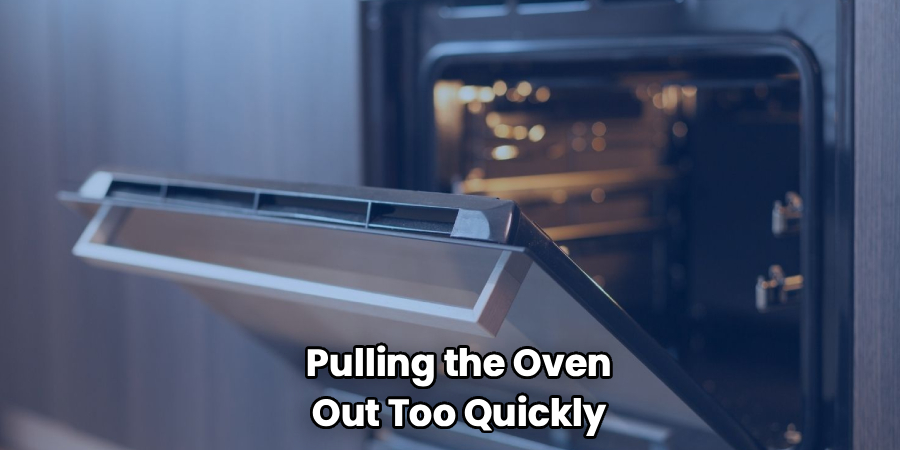
Another mistake is pulling the oven out too quickly. The power cord or gas line behind it may be short, stiff, or caught under a leveling leg. A sudden tug can bend a connector, damage the outlet, or create a gas leak risk. Slow movement gives you time to spot trouble.
Many beginners also lift from the wrong places. The oven door handle, control panel, and knobs are not lifting points. Use the sides, moving straps, and an appliance dolly instead.
Finally, some people forget floor protection. Even a short slide can scratch hardwood, tear vinyl, or crack weak tile. Protecting the path takes minutes and can save you from an expensive repair.
Expert Tips
If you have never moved a large appliance before, work with at least one helper. Clear communication matters as much as strength. Use simple phrases like “stop,” “tilt,” “lower,” and “hold” so everyone reacts quickly.
Take photos before disconnecting anything. A quick picture of the power cord, gas line, bracket, and surrounding space can help when reconnecting later. Also, keep the oven as upright as possible during transport. This protects internal parts and makes the load easier to control.
If you feel strain in your back, stop and reset your grip. Heavy appliances reward patience. A careful five-minute pause is much better than an injury or damaged kitchen floor.
Frequently Asked Questions
Can I move an oven by myself?
You should avoid moving a full-size oven alone. Most ranges are heavy, awkward, and hard to balance, especially when sliding over thresholds or loading onto an appliance dolly. A second person can guide the back, watch connections, and help prevent tipping. If stairs, gas lines, or tight corners are involved, hire a professional mover or appliance technician.
Do I need to disconnect the gas line before moving a gas oven?
Yes, if the oven must move far enough to strain the gas line, the connection needs proper handling. First, turn off the shutoff valve. If you know how to disconnect the flexible line safely, proceed with care. If not, call a licensed professional. Gas connections are not a place to guess, and safety checks should happen before the oven gets used again.
How do I protect hardwood floors when moving an oven?
Use sturdy floor protection before sliding or rolling the oven. Thin plywood, hardboard, thick cardboard, or moving blankets can help spread the weight and prevent scratches. Clean the floor first so grit does not scrape the finish. Avoid dragging bare metal feet across wood. If using furniture sliders, move slowly and keep the oven balanced.
Should I remove the oven door before moving it?
You usually do not need to remove the door for a short move, but it can help reduce weight on some models. Check the owner’s manual before removing it because hinge designs vary. If you leave it attached, secure it so it does not swing open. Never lift the appliance by the door handle, even if the door feels solid.
What safety checks should I do after moving an oven?
Check that the oven sits level, the power cord is not pinched, and the appliance is stable. For gas models, confirm the gas line is not kinked and the shutoff valve works correctly. If you smell gas, turn it off and leave the area. For electric models, inspect the plug and outlet before use. Test burners and oven heat only after everything looks secure.
Conclusion
Moving an oven becomes much easier when you treat it as a step-by-step safety task instead of a quick muscle job. Start by measuring the route, clearing the space, turning off power or gas, and protecting the floor. Then remove loose parts, slide the appliance slowly, secure it on an appliance dolly, and reconnect it with care.
The main things to remember are control, communication, and patience. Watch the power cord, gas line, leveling legs, corners, and flooring at every stage. If anything feels unsafe, especially with a gas connection, stop and bring in a qualified professional.
Now that you know how to move an oven, you can handle the job with more confidence and less risk. Take your time, use the right equipment, and make safety checks your final step before cooking again.

About
Nick Hall has spent the last seven years working at the intersection of kitchen design and home repair — first as a design assistant at a residential renovation studio, then as a freelance writer covering everything from cabinet layouts to leaky faucet fixes.
Her approach is simple: kitchens should look good and function well. That means she’s just as comfortable talking about color palettes and counter materials as she is walking readers through how to fix a wobbly cabinet hinge or troubleshoot a garbage disposal.
Nick has worked directly with homeowners on small-space kitchen makeovers, budget-conscious renovations, and the kind of everyday repairs that don’t need a contractor — just the right instructions. She writes from experience, not theory, and tests most of the fixes and tips she shares before publishing them.
When she’s not writing, Nick is usually hunting for mid-century kitchen finds at estate sales or helping friends plan their own renovations. She lives in Columbus, Ohio.