
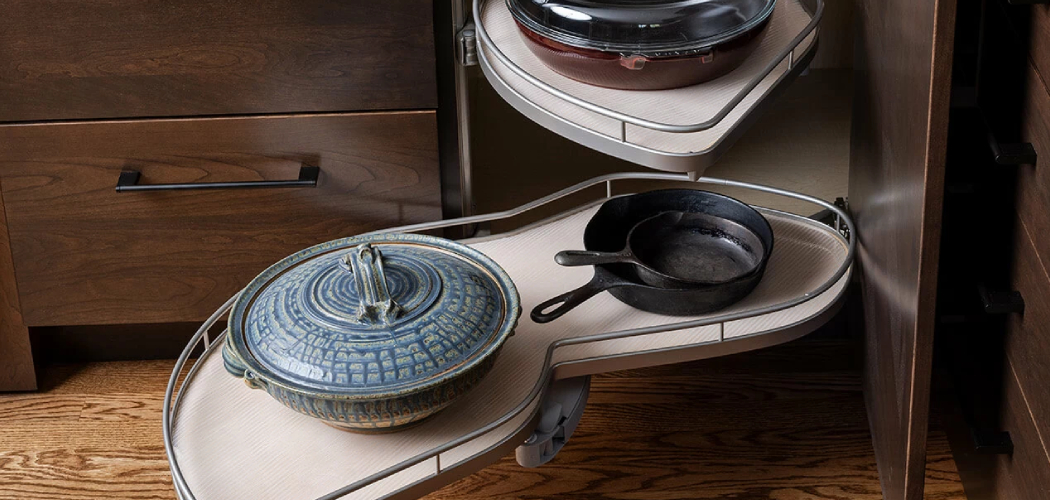
A corner kitchen cupboard can be one of the most awkward spots in your home. Items slide to the back, lids get lost, and useful space often turns into a dark catch-all for things you forget you own. The good news is that you do not need a full kitchen remodel to fix it. With a few smart storage choices and a clear plan, you can turn that hard-to-reach corner into a space that works well every day.

If you have been searching for how to organize a corner kitchen cupboard, the key is to match the storage setup to what you use most often and how your cupboard opens. This guide will show you how to sort, store, and maintain a corner cupboard in a simple, beginner-friendly way.
Why Organizing Corner Cabinets Matters
Corner cabinets waste space fast when they are not organized well. Their deep shape makes it easy for bowls, pans, and pantry goods to disappear behind larger items. When that happens, you buy duplicates, lose time looking for things, and make cooking feel harder than it should.
This matters even more if you cook in a small home, cabin, camper, or outdoor kitchen setup. In tight spaces, every inch counts. A well-planned corner cupboard helps you store more without making the kitchen feel crowded. It also keeps your most-used gear within reach, which is helpful when you are cooking in a compact area with limited counter space. Learning to organize this tricky spot gives you more control, more storage, and a smoother daily routine.
Tools and Materials You’ll Need
Before you begin, gather a few simple tools and storage aids. You may not need every item, but having them ready makes the process easier.
- Microfiber cloth or sponge
- Gentle kitchen cleaner or degreaser
- Trash bag or donation box
- Measuring tape
- Notepad or phone for recording cupboard dimensions
- Shelf liner for grip and easy cleaning
- Lazy Susan or turntable for round items
- Small storage bins or clear containers
- Stackable shelf risers
- Labels or masking tape
- Marker or pen
- Optional: battery-powered puck light to brighten the back of the cabinet
Choose organizers that fit your cabinet’s depth and shape. A good fit matters more than buying a lot of products.
Step-by-Step Guide on How to Organize a Corner Kitchen Cupboard
Step 1 – Empty the cupboard completely
Start by taking everything out of the cupboard, even the items that seem fine where they are. Set everything on a counter or table so you can see the full picture. Once the cabinet is empty, you will notice how much space you really have and where dust, crumbs, or sticky spots have built up over time.

This step is also helpful because it resets your thinking. Instead of shuffling items around inside a cramped space, you get to rebuild the cabinet with purpose. Wipe the shelves, corners, and hinges until the area feels fresh and clean. A clean cupboard is easier to work with, and it makes the whole project feel more satisfying from the start.
Step 2 – Sort items by use and category
Now divide everything into clear groups. Put baking tools together, stack mixing bowls in one spot, gather food containers in another, and place pantry items in their own category. This makes it easier to see what belongs in the corner cabinet and what should live somewhere else.
Be honest about what you use. If you only reach for a roasting pan twice a year, it does not need the easiest spot. Daily-use items deserve the best access. This is one of the smartest parts of learning how to organize a corner kitchen cupboard because the goal is not just neatness. The goal is to make your kitchen easier to use every day, especially when you are in a hurry and need to find something fast.
Step 3 – Remove duplicates and anything you do not need
Corner cabinets often collect items that have no real home. Extra plastic containers, chipped mugs, mystery lids, and old gadgets tend to pile up because the space is deep and easy to ignore. Go through each category and remove anything broken, unused, or duplicated without a good reason.
Try to keep only what supports your real cooking habits. If you have six casserole dishes but use two, store the favorites and donate the rest. This step creates breathing room, which is essential in a corner space. A cupboard stuffed to the edges is hard to maintain and frustrating to use. When you trim it down, the cabinet starts to feel lighter, calmer, and much more functional.
Step 4 – Measure the space before adding organizers
Before you buy bins, risers, or turntables, measure the cupboard carefully. Check the width at the opening, the depth from front to back, and the usable height between shelves. If your cabinet has an angled door, center divider, or curved interior, note that too. These details matter more in a corner cupboard than in a standard cabinet.
A product that looks perfect online may not fit once the door swings shut. Measure twice and think about reach, not just storage volume. You want organizers that help you access the back without scraping your hands or knocking things over. Good measurements save money, reduce clutter, and help you choose tools that truly solve the problem instead of adding another layer of frustration.

Step 5 – Assign zones based on reach and frequency
Once you know what you are keeping, decide where each category should go. The front section should hold items you use often, such as food containers, mixing bowls, or dry goods. The deeper back area can store less-used serving dishes, seasonal cookware, or backup supplies.
Think of the cupboard in zones instead of as one big box. This approach makes how to organize a corner kitchen cupboard much easier because each area gets a job. The easiest-to-reach space should support your daily routine. The harder-to-reach space can handle occasional items. When you open the door, you should be able to tell at a glance what belongs in front, what belongs in back, and where to return things after washing or unloading groceries.
Step 6 – Add simple storage tools that improve access
Now bring in the organizers that suit your cabinet layout. A Lazy Susan works well for oils, sauces, or small pantry jars because it brings back-row items forward with one spin. Shelf risers can double your usable height for plates, mugs, or canned goods. Clear bins help contain loose packets, snacks, or baking supplies that would otherwise slide around.
Keep the setup simple. Too many organizers can make a corner cupboard more awkward, not less. Choose one or two tools that solve your biggest access problem. If the cabinet is dark, a small puck light can help you see the back clearly. The best organizers feel smooth and easy in use. You should not have to wrestle with the storage system just to grab a bowl or spice jar.
Step 7 – Store heavy and bulky items with care
Heavy items need thoughtful placement in a corner cupboard. Put cast iron pans, large appliances, or stacked ceramic dishes where they are stable and easy to lift without twisting your body. Usually, that means lower shelves and spots near the front. Avoid placing very heavy pieces deep in the back where you have to lean in and pull at an awkward angle.
Bulky items also benefit from limits. If one shelf holds three large pots and nothing else, that may be the right call. Trying to squeeze in more often leads to scraping, clanging, and broken stacks. Listen to how the cupboard works when you open it. If items knock together or feel hard to remove, the shelf is probably too full. Quiet, easy access is a good sign that your layout is working.
Step 8 – Label and reset the cabinet with intention
The final step is putting everything back in its assigned place and making the system easy to maintain. Return items by category and keep similar things together. If you use trash bins, add simple labels so everyone in the home knows where things belong. Labels are especially useful for snacks, baking tools, food wraps, or storage lids that tend to drift.
Take a final look once the cupboard is filled. The space should feel neat but not packed tight. You should be able to reach most items without digging. Open and close the door a few times to test the flow. A good corner cabinet setup feels steady, visible, and easy to reset after a busy day of cooking. That is what turns one cleanout session into a lasting habit.
Common Mistakes
One common mistake is treating the corner cupboard like a dumping zone for random kitchen gear. Because the space is deep and partly hidden, it is tempting to toss in items that do not fit elsewhere. That may solve the problem for a day, but it creates confusion later. When categories are mixed together, the cabinet becomes harder to use and harder to keep tidy.
Another mistake is ignoring reach. Many people store everyday items in the deepest part of the cabinet, then get frustrated when they have to crouch, stretch, or unload half the shelf to reach one bowl. The easiest spot should always go to the items you use most.
Buying organizers before measuring is another issue. A bin that is too tall, too wide, or too deep can waste more space than it saves. Corner cabinets have odd shapes, so fit matters more than style.
Overfilling the cupboard is also a big problem. When shelves are packed too tightly, items scrape, tip, and disappear behind each other. The space may look full, but it does not work well. Lastly, many people skip maintenance. Even a great system can fail if you stop returning items to their zones. A quick reset each week keeps the cabinet functional and easy to trust.
Expert Tips
If you want your corner cupboard to stay organized, think in layers. Store the least-used items farthest back, medium-use items in the middle, and daily essentials near the front edge. This simple rule helps you make fast decisions every time you put something away.
Use clear containers when possible. They let you see what you have without pulling everything out, which cuts down on clutter and duplicate purchases. If you store dry goods, choose square or rectangular containers for better space use.
Try not to mix cookware, pantry goods, and cleaning items in the same corner cabinet. One function per cupboard usually works best. Finally, leave a little empty space on purpose. That open room makes it easier to remove items, clean the shelf, and adapt the storage when your kitchen needs change.
Frequently Asked Questions
What is the best way to use deep corner cabinet space?
The best way is to divide the space by reach. Keep everyday items near the front and occasional-use items toward the back. Add tools like a Lazy Susan, pull-out basket, or clear bin to make deep areas easier to access. The goal is to reduce digging so the cabinet stays practical, not just full.
Should I store pots and pans in a corner cupboard?
Yes, if the cupboard is low and easy to reach. Large pots, pans, and mixing bowls often fit well in corner cabinets because they use wide, awkward space better than small items do. Just avoid stacking them too high or pushing the heaviest pieces too far back, where lifting them can feel awkward and unsafe.
How do I keep a corner cupboard from getting messy again?
Use simple zones and return items to the same place every time. Labels, bins, and shelf liners can help you keep order without much effort. A short weekly reset also makes a big difference. If you notice clutter building up, remove a few items right away instead of waiting for the cabinet to get out of control.
Are Lazy Susans good for corner kitchen cabinets?
Yes, they are often very helpful, especially for jars, bottles, spices, and small pantry goods. A turntable lets you bring hidden items forward instead of reaching blindly into the back. They work best when the shelf is fairly open and the items are not too tall or heavy. Measure first so the spinner can move freely.
What should not go in a corner kitchen cupboard?
Avoid storing fragile items you use often, heavy appliances that are hard to lift, or anything that leaks easily. Cleaning products should also stay separate from food and cookware. Corner cupboards can be dark and awkward, so they are not ideal for things that need frequent handling unless you have a system that makes access easy and safe.
Conclusion
A corner kitchen cupboard does not have to be the place where useful items vanish. With a clear plan, you can turn that awkward space into one of the most efficient storage spots in your kitchen. The process is simple: empty everything out, sort what you own, remove what you do not need, measure the space, and build storage zones based on reach and use. Add a few well-chosen organizers, and the cabinet becomes easier to see, easier to clean, and much easier to use.
The real goal is not to make the cupboard look perfect for one day. It is to create a system you can keep up with during real life. When your bowls, pans, containers, or pantry items all have a logical home, cooking feels smoother and less stressful.
If you now feel more confident about how to organize a corner kitchen cupboard, start small and focus on function first. A tidy corner cabinet saves time, reduces clutter, and helps your whole kitchen work better.

About
Nick Hall has spent the last seven years working at the intersection of kitchen design and home repair — first as a design assistant at a residential renovation studio, then as a freelance writer covering everything from cabinet layouts to leaky faucet fixes.
Her approach is simple: kitchens should look good and function well. That means she’s just as comfortable talking about color palettes and counter materials as she is walking readers through how to fix a wobbly cabinet hinge or troubleshoot a garbage disposal.
Nick has worked directly with homeowners on small-space kitchen makeovers, budget-conscious renovations, and the kind of everyday repairs that don’t need a contractor — just the right instructions. She writes from experience, not theory, and tests most of the fixes and tips she shares before publishing them.
When she’s not writing, Nick is usually hunting for mid-century kitchen finds at estate sales or helping friends plan their own renovations. She lives in Columbus, Ohio.