
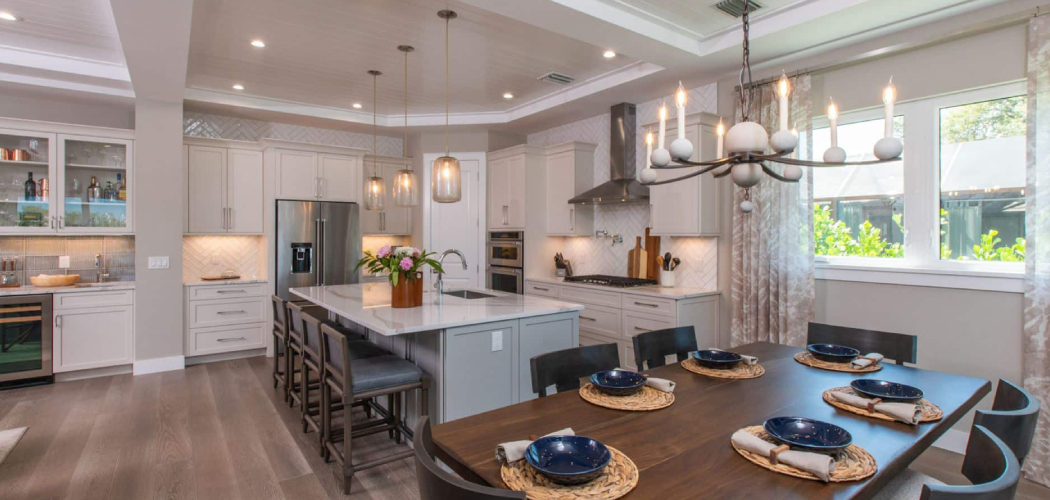
Learning how to pair kitchen and dining lights can make your whole main living space feel more polished, balanced, and easy to use. Good lighting does more than brighten a room. It shapes the mood, helps with daily tasks, and ties nearby spaces together so they feel intentional instead of disconnected.
For beginners, this process can seem tricky at first. You may wonder if fixtures need to match exactly, how bright each area should be, or what finishes work best together. The good news is that pairing lights is less about strict rules and more about creating harmony through scale, style, color, and function.
This guide will show you how to choose kitchen and dining lighting that works together beautifully and practically.

Why Pairing Lights Matters
The kitchen and dining area often sit side by side, especially in open-concept homes. When the lighting in each zone feels unrelated, the whole space can look choppy. One room may feel too harsh while the other feels too dim, or one fixture may dominate the space in a way that throws off the visual balance.
Pairing your lights well helps both spaces feel connected without making them look identical. It also improves function. Your kitchen needs clear task lighting for prep and cooking, while your dining area usually benefits from softer, more focused ambient light. When you coordinate both, you get better comfort, stronger style, and a smoother flow from one area to the next.
That balance is what makes a shared living space feel finished.
Tools and Materials
Before you start choosing or installing fixtures, gather a few basics so you can plan with confidence:
- Tape measure
- Notepad or phone notes app
- Room dimensions for both spaces
- Ceiling height measurements
- Photos of your kitchen and dining area
- Finish samples, paint swatches, or cabinet color references
- Fixture dimensions from product listings
- Light bulb details, including color temperature and brightness
- A simple floor plan or sketch of the room
- Ladder for checking mounting height and sightlines
- Optional: Painter’s tape to mark fixture size and placement on the ceiling
Step-by-Step Guide on How to Pair Kitchen and Dining Lights
Step 1 – Study the room as one connected space
Start by standing where you can see both the kitchen and dining area at the same time. Look at the sightlines, ceiling height, natural light, and how one zone flows into the next. This first look matters because you are not choosing two separate lights in isolation. You are shaping the feel of one shared environment.
Notice where your eye goes first. A large island pendant may already act as a focal point, or a dining chandelier may naturally anchor the space. Think about whether the current balance feels calm or uneven. If one side looks heavy and the other side disappears, your lighting plan should correct that.
This early visual check makes the rest of the process much easier.
Step 2 – Define what each area needs from light
The kitchen and dining room serve different purposes, so they should not be lit in exactly the same way. Your kitchen usually needs brighter, cleaner light for chopping, reading labels, and cooking safely. The dining area often works best with a softer glow that feels welcoming during meals and conversations.
As you think through how to pair kitchen and dining lights, focus on function first. A beautiful fixture will still disappoint you if it does not support how you use the room. Picture a busy morning in the kitchen, then imagine a slow evening dinner nearby. Those two scenes need different light levels, but they should still feel related.
When function leads the design, the room becomes easier to enjoy every day.
Step 3 – Choose a shared design thread
Your fixtures do not need to match as a set, but they should share at least one clear design feature. That could be finish, shape, material, line, or overall style. For example, black metal pendants over the island can pair well with a black-framed dining chandelier. Warm brass sconces can also work with a brass-accented pendant if the forms feel connected.
This is where many beginners overcorrect. They either buy identical fixtures for both spaces, which can feel flat, or choose completely different styles, which can feel random. A better approach is coordination, not duplication.
Think of the lights as family members. They should look related, but each one can have its own role and personality.
Step 4 – Balance scale and visual weight
A fixture can be beautiful on its own and still feel wrong in the room if its size is off. In the kitchen, island pendants should fit the island length and leave enough open space around them. In the dining area, a chandelier or pendant should suit the table size and the room around it.
Visual weight matters just as much as actual measurements. A dark, solid fixture often feels heavier than an open, airy one of the same size. If your kitchen lights look bold and substantial, your dining light should have enough presence to hold its own. It does not need to be larger, but it should feel intentional.
Painter’s tape can help here. Mark the fixture width on the ceiling and step back to see the proportions.

Step 5 – Coordinate finishes without making them identical
Finishes help tie the room together, but they do not need to be perfectly uniform. In fact, spaces often feel richer when finishes are coordinated instead of copied exactly. Matte black, aged brass, brushed nickel, polished chrome, and bronze can all work well when used with purpose.
When deciding how to pair kitchen and dining lights, check the finishes already in the room. Look at cabinet hardware, faucets, bar stools, table legs, and appliance details. If your kitchen has warm hardware and wood tones, a cool chrome dining fixture may feel disconnected. On the other hand, mixing black and brass can look layered and thoughtful if both finishes appear elsewhere in the space.
Aim for a finish story that feels steady from one zone to the next.
Step 6 – Match the light color and brightness
Even well-paired fixtures can feel wrong if the bulbs fight each other. One of the most common problems in open spaces is mismatched color temperature. A crisp, bluish kitchen light next to a warm, golden dining light can make the room feel split in half.
Choose bulbs with a consistent color temperature, usually in the warm white range for a home. Then think about brightness. Kitchens often need more lumens overall, but that does not mean the dining area should feel dim or dull. It simply means each space should support its function while still blending visually.
If possible, use dimmers. They give you flexibility, especially when natural daylight changes and your needs shift from work mode to meal mode.
Step 7 – Think about height, spacing, and sightlines
Placement has a huge effect on how your lights work together. In the kitchen, pendants should hang low enough to feel grounded but high enough to protect sightlines across the room. Over the dining table, the fixture should feel intimate without blocking faces or making the room seem crowded.
Stand in different spots and imagine how the lights will look from each angle. View them from the entry, the sink, and the dining chairs. Good pairing is not only about style. It is also about how the fixtures relate in real life when you move through the room.
This practical step often reveals small adjustments that make the whole space feel calmer and more balanced.
Step 8 – Layer the room for flexibility and comfort
A strong lighting plan rarely depends on one fixture alone. Instead, it layers ambient, task, and accent lighting. In the kitchen, recessed lights, under-cabinet lighting, and pendants may all work together. In the dining space, the main fixture can be supported by wall sconces, nearby lamps, or even soft natural light during the day.
When learning how to pair kitchen and dining lights, this layered approach helps you build a space that looks good and works hard. You avoid harsh glare in one zone and dead spots in another. More important, the room feels adaptable.
That flexibility matters. A bright family breakfast, quiet dinner, and holiday gathering all ask different things from the same connected space.

Common Mistakes
One common mistake is choosing fixtures that are too similar because you want everything to match. Exact matching often makes a space feel stiff and less custom. Your kitchen and dining room should relate, but each area still needs its own identity based on how you use it.
Another mistake is ignoring scale. Tiny pendants over a long island can disappear, while an oversized dining chandelier can overwhelm the table below it. Poor proportion creates visual tension, even if the fixtures are stylish on their own.
Many homeowners also forget about bulb color temperature. This small detail has a big impact. If your kitchen lighting is cool and bright while your dining light is warm and soft, the transition between spaces can feel awkward and unfinished.
A fourth issue is focusing only on the fixture and not the whole room. Cabinet finishes, hardware, wood tones, paint color, and furniture all affect whether your lighting choices feel connected. A light may look perfect in a product photo but feel out of place in your actual home.
Finally, people often skip dimmers. That limits how useful the room can be. Good paired lighting should handle cooking, cleaning, eating, and entertaining with ease.
Expert Tips
Start with the dining fixture or the island pendants, not both at once. Choose the stronger focal point first, then select the second fixture to support it. This keeps the room from competing with itself.
If you feel stuck, repeat one element across both spaces. That might be a shared finish, a similar curve, or a common material like glass, linen, or metal. Even a small repeated detail can create a clear visual link.
Also, test fixtures in context whenever possible. Look at product dimensions, mock up placement, and compare finishes in daylight and evening light. A fixture that seems subtle in a showroom can feel much bolder at home. Thoughtful testing helps you avoid expensive design mistakes.
Frequently Asked Questions
Do kitchen and dining lights need to match exactly?
No. They should coordinate, not match perfectly. The best pairings usually share a few design elements, such as finish, shape, or style, while still looking distinct. This creates a more natural and custom look. Exact matching can work in some homes, but it often feels less layered and less interesting in open spaces.
What finish works best for mixed kitchen and dining lighting?
The best finish depends on the materials already in your room. Matte black is versatile and works with many styles. Brass adds warmth and can feel elegant or modern depending on the shape. Brushed nickel is softer and more understated. The key is to repeat the finish, or a complementary one, in other room details so it feels intentional.
Should the dining light be brighter than the kitchen lights?
Usually, no. The kitchen often needs brighter light because it supports prep work and cooking. The dining area typically benefits from a softer, more comfortable glow. That said, the dining fixture should still provide enough light for meals and conversation. Dimmers are the easiest way to create the right balance for both spaces.
How far apart should kitchen pendants and dining fixtures feel visually?
There is no single number, because room size and layout vary. What matters more is balance. The fixtures should feel related in style and scale when viewed together. If one looks overly bold or delicate next to the other, adjust the size, finish, or form until the two areas feel connected from across the room.
Can I mix modern kitchen lights with a more traditional dining fixture?
Yes, if you bridge the styles carefully. Look for a shared element, such as color, material, or silhouette. For example, a clean-lined modern pendant can work with a classic dining chandelier if both use warm brass or frosted glass. Mixing styles often creates more character than sticking too rigidly to one look.
Conclusion
Once you understand how to pair kitchen and dining lights, the process becomes much less intimidating. You are not trying to find two fixtures that are exactly alike. You are building a relationship between two nearby spaces that need different kinds of light but still need to feel unified.
Start by looking at the room as a whole. Then think through function, style, scale, finish, brightness, and placement. Those decisions work together to create a space that feels balanced when you cook, dine, clean, or entertain. Small details, like matching bulb temperature or adding dimmers, often make a bigger difference than people expect.
If you are new to home lighting, keep it simple. Pick one shared design thread and build from there. With a little planning, you can create a kitchen and dining area that feels comfortable, practical, and beautifully connected every day.

About
Nick Hall has spent the last seven years working at the intersection of kitchen design and home repair — first as a design assistant at a residential renovation studio, then as a freelance writer covering everything from cabinet layouts to leaky faucet fixes.
Her approach is simple: kitchens should look good and function well. That means she’s just as comfortable talking about color palettes and counter materials as she is walking readers through how to fix a wobbly cabinet hinge or troubleshoot a garbage disposal.
Nick has worked directly with homeowners on small-space kitchen makeovers, budget-conscious renovations, and the kind of everyday repairs that don’t need a contractor — just the right instructions. She writes from experience, not theory, and tests most of the fixes and tips she shares before publishing them.
When she’s not writing, Nick is usually hunting for mid-century kitchen finds at estate sales or helping friends plan their own renovations. She lives in Columbus, Ohio.